Heart · Second opinion
Heart valve replacement and child heart surgery abroad
Valve replacement and child heart surgery need a specialist opinion on the patient's own heart reports before any travel plan makes sense. This guide explains how a second opinion works, what records to share, and the questions to ask, so a family can decide with clear written information.
Which country is best for a child's heart-hole surgery?
No country is best for every child, because a heart hole differs in size, position, and effect on the child, and the surgeon must see the echo and the child's history first. Families often compare a few centres through written second opinions, then weigh the surgical plan, the follow up care at home, and the travel load on the child.
What does valve surgery cost abroad?
No figure in this guide can answer that, because the cost depends on the valve type, the surgical approach, the hospital stay, and the care needed after surgery. A centre can only give a real figure after reviewing the echo, the angiogram if one exists, and the patient's other conditions. Ask for a written estimate that lists what is included.
Mechanical or tissue valve: who decides?
The treating cardiac surgeon decides with the patient and the family, after weighing age, other health conditions, and the need for long term blood thinning medicine. A mechanical valve usually lasts longer but needs that medicine for life, while a tissue valve may need replacement later. The choice is personal, so it belongs in a direct discussion with the surgeon.
How a second opinion works
A second opinion starts with the records, not with a flight. The family sends the echo, the ECG, the recent blood tests, and the notes from the doctor in Dhaka, and the cardiac team abroad reads them and writes back. That written reply should name the diagnosis as the team sees it, state whether surgery is advised now or whether waiting with regular review is safe, and list the operation they would plan. If the reply only says the patient is welcome to come, it is an invitation, not an opinion, and an invitation is not enough to plan travel around.
Two written opinions are often more useful than one, because heart surgery turns on judgement as much as on measurements. One surgeon may advise an operation now, while another may advise medicine and review first. That difference does not mean one of them is wrong. It means the family has a real choice to talk through with their own doctor in Dhaka.
Archon Healthcare does not name a hospital for valve replacement or child heart surgery in this guide, because no delivering hospital for these operations is named in our record. We help families collect records, ask for written opinions, and compare the plans that come back. The decision stays with the patient, the family, and the treating surgeon.
Records to share before you ask for an opinion
Heart teams work from images and measurements, so clear digital files matter more than long written summaries. Send the original echo files where you have them, along with the printed report, and include the most recent tests. A team that sees an old echo will answer for an old heart, and the answer may no longer fit.
- The most recent echo report and the original echo images, with the measurements for valve size, leak, and heart function.
- ECG tracings, chest X-ray, and recent blood tests, including kidney function and blood counts where the doctor ordered them.
- Notes on any earlier heart operation or catheter procedure, including the date, the centre, and any device or valve already in place.
- A short list of current medicines, allergies, and other conditions such as diabetes, high blood pressure, or lung disease.
Keep a copy of everything you send, and send the same set to each centre you ask. When the sets match, the opinions can be compared fairly. When they do not match, the replies will differ for reasons that have nothing to do with the heart.

The valve choice, in plain terms
The valve question is really two questions. The first is whether the valve needs replacing now, and the second is which type of valve fits this patient if it does. The surgeon answers the first from the echo and the symptoms, and the second from the patient's age, daily life, and other health conditions. For a younger patient, how long the valve lasts carries more weight. An older patient may weigh the daily routine of blood thinning medicine more heavily.
Ask the surgeon to write down the reasons for the valve type they advise, and the follow up routine that goes with it. Blood thinning medicine needs regular blood tests and care with cuts, dental work, and other operations. A tissue valve needs regular echo review so any wear is caught early. Both paths need follow up at home, so ask who will do that review before you travel.
Child heart surgery: what families should ask
A child with a hole in the heart needs a plan that covers the operation and the months after it. The family should know how long the child stays in hospital, how feeding and activity limits work at home, and when the next echo is due. The parents should also know who to call if the child develops a fever, breathes fast, or eats less than usual after surgery.
Travel adds its own load. A small child tires fast, and a long flight with a heart condition needs the surgeon's written clearance. Both parents should travel when possible, and the return ticket should allow a change if the surgeon asks the child to stay longer. The visa file should include the hospital letter, the child's birth certificate, and the parents' identity documents, and the family should check the current visa rules with the embassy before booking.
- Is surgery needed now, or can the hole be watched with regular echo review?
- Who is the named paediatric cardiac surgeon, and who looks after the child in intensive care?
- What does the written plan include, and what follow up is needed after we return to Dhaka?
- What signs at home mean we should seek care at once, and who do we contact first?
Paying for treatment through your bank
Hospital bills abroad are paid through a bank in Bangladesh, and the rules for that payment changed in November 2026. The table below states the one figure this guide relies on, with its source and date. Every other cost in your case comes from the written estimate of the centre that reviews your reports.
| Item | Figure | Source and date |
|---|---|---|
| Foreign exchange your bank may release for medical treatment abroad without prior approval from Bangladesh Bank | Up to $30,000 or equivalent | Bangladesh Bank, FEPD-2 Circular No. 11, 9 November 2026 |
| Previous limit for the same release | $15,000 | Same circular, 9 November 2026 |
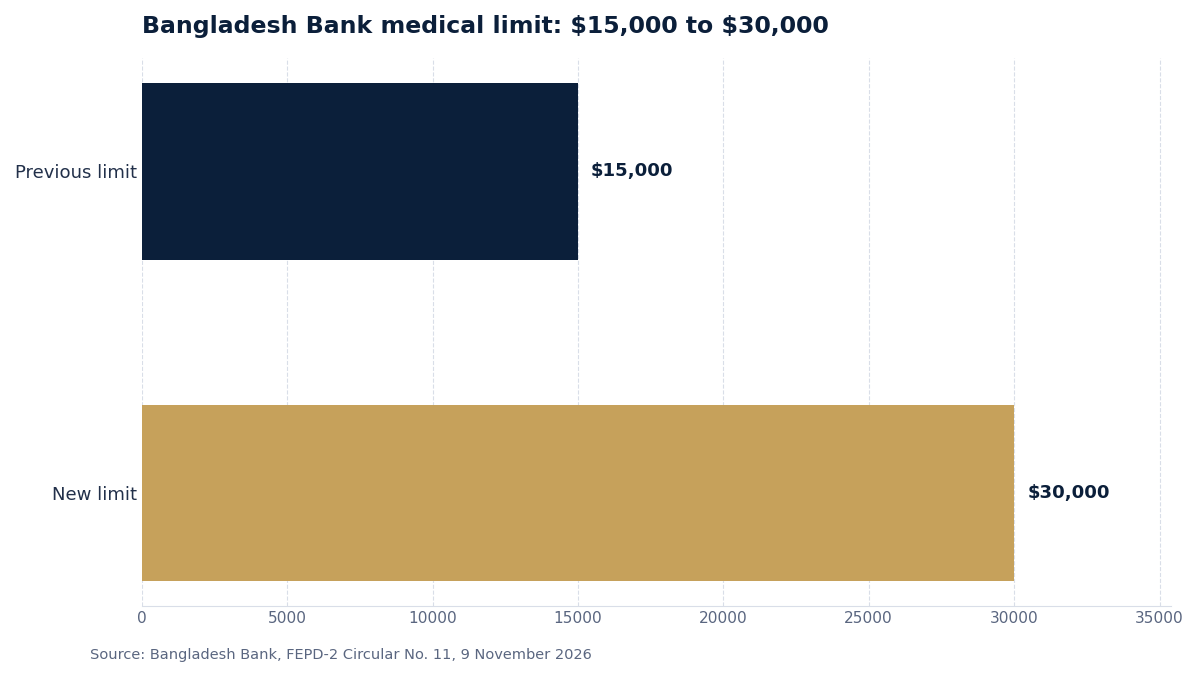
Without prior approval, authorised dealer banks may release up to $30,000 for medical treatment abroad under that circular, and amounts above that figure follow the existing rules for approval. Ask your bank early what documents it wants, and keep the hospital invoice and the written estimate together. You can read the circular itself at Bangladesh Bank, FEPD-2 Circular No. 11, 9 November 2026.
Visa and travel planning
Heart treatment abroad needs a visa arranged before travel, supported by a hospital letter that states the diagnosis, the planned operation, and the expected stay. For a child, both parents should be named in the file, and the attendant's relationship to the patient should be clear from the documents. Visa rules differ by country, so check the current requirements with the embassy and do not book non refundable travel until the visa is in hand.
For the visa steps in full, read our general medical visa guide and the guide on how a second opinion works, which explains the written opinion step that should come before any travel booking. A written plan first, then a visa, then travel keeps a family from paying for a trip the heart team has not yet advised.
Frequently asked questions
Which country is best for a child's heart-hole surgery? No country is best for every child. The surgeon must see the echo and the child's history first, so families often compare a few centres through written second opinions.
What does valve surgery cost abroad? No figure in this guide can answer that. A centre can only give a figure after reviewing the echo, the angiogram if one exists, and the patient's other conditions, so ask for a written estimate that lists what is included.
Mechanical or tissue valve: who decides? The treating cardiac surgeon decides with the patient and the family, after weighing age, other health conditions, and the need for long term blood thinning medicine.
Discuss your case with us, free
Share your reports and get an honest opinion: the right hospital, the written estimate, and whether you should travel at all.
Chat on WhatsAppEmail UsSubmit your reports