Planning · Honest advice
When you should not travel abroad for treatment
You should not travel abroad for treatment when your own doctor says it can be done safely at home, when you are too unwell to fly, or when the trip would delay care you need now. Going abroad helps when the treatment is not available here, or when a second opinion would change the plan. Start with your doctor.
Is treatment abroad always better than Dhaka?
No. Treatment abroad is better only when it offers something your care at home cannot, such as a procedure that is not available here, a specialist team with deeper experience in a rare condition, or a second opinion that changes the plan. For many common operations and for follow-up care, Dhaka hospitals do the work well.
The mistake is to judge a hospital by its country. A famous hospital abroad can still be the wrong place for your case, and a Dhaka hospital can be the right place for it. What matters is the team, the volume of similar cases they handle, and whether their plan fits your condition. Ask your doctor to name the specific thing the foreign hospital would do differently. If the answer is vague, the trip is probably not needed.
There is also the question of what happens after you come home. Surgery abroad still needs follow-up in Dhaka, and your local doctor needs the full record of what was done. A trip that gives you a good operation and a poor handover can leave you worse off than staying home with a doctor who knows you.
Which patients are too unwell to fly?
Patients who are too unwell to fly include anyone whose condition is unstable, anyone who has just had major surgery, and anyone who needs oxygen or close monitoring that a cabin cannot provide. Your treating doctor and the airline's medical clearance decide this, and no facilitator can overrule them.
Flying is not rest. Cabin pressure is lower than at ground level, you sit still for hours, and help is far away if something goes wrong mid-flight. A patient with unstable chest pain, uncontrolled breathlessness, a fresh wound, or a recent stroke should not be put on a plane in the hope that the hospital at the other end will fix it. The flight itself is part of the treatment risk, and it has to be counted as such.
If your doctor says you are not fit to fly, that is the end of the discussion for now. Treatment can often be stabilised at home first, and the trip can be reconsidered once you are stable. A facilitator who pushes you to fly against your doctor's advice is putting its business ahead of your health.
What should be tried at home first?
What should be tried at home first is a full review by your own doctor, including recent scans and blood tests, an honest talk about what local treatment can do, and a second opinion from another Dhaka specialist if the first view is unclear. Many patients who travel have never had that conversation.
Start with the basics. Make sure your diagnosis is complete and your reports are recent. Ask your doctor what the local options are, what each one costs, and what the risks look like. If the local plan is sound and the team is experienced in it, staying home is usually the better choice, and it is certainly the cheaper and less tiring one.
A second opinion at home is worth more than a second opinion abroad when the question is whether the diagnosis is right. Once the diagnosis is settled and the local options are understood, a foreign second opinion can still help in complex cases, such as a rare cancer or a surgery your doctor calls high risk. That is the right order: settle the facts at home, then decide whether abroad adds anything.

When waiting is the real risk
There is one situation where delay is worse than travel, and it deserves a plain statement. If your doctor says you need treatment soon and the local waiting list or the local capacity cannot meet that timing, then the conversation about going abroad becomes urgent. The same applies if the treatment you need is simply not offered here. In those cases the focus shifts to where to go and how fast it can be arranged.
The difference between this and the cases above is that here your doctor is the one raising the trip, and the reason is medical. When the push to travel comes from an agent or an advertisement, treat it with care. When it comes from your doctor, act on it.
How to decide with your doctor
Sit with your treating doctor and ask four plain questions. What exactly would the foreign hospital do that cannot be done here? What would happen if we waited a month? What are the risks of the flight and the stay? And who will look after me when I come home? Write the answers down. A decision made from written answers is a better decision than one made from hope.
If the answers point abroad, get the foreign hospital's written opinion on your existing scans before booking anything. A written second opinion costs little and takes days, and it sometimes says the treatment can be done at home. That is an answer worth having before you spend on flights and hotels.
If the answers point to staying home, accept that as a good outcome. It means your care is available where you live, near your family and your doctor. Going abroad is a tool for specific gaps. Staying home can be the most serious and careful choice.
Costs that do not change the medical decision
| Item | Figure | Source and date |
|---|---|---|
| NanoKnife, typical per session | $20,000 to $30,000 | Archon Healthcare unified pricing, November 2026 |
| NanoKnife, complex cases | Up to $60,000 per session | Archon Healthcare unified pricing, November 2026 |
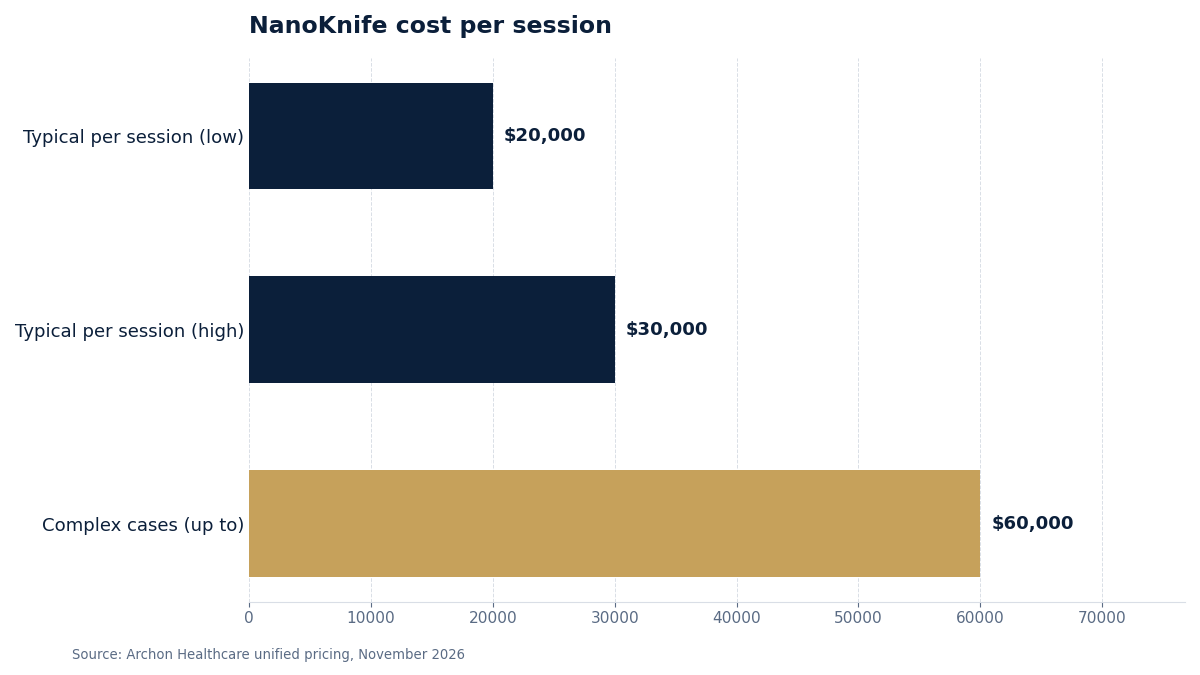
NanoKnife typically costs $20,000 to $30,000 per session, and up to $60,000 in complex cases, according to Archon Healthcare unified pricing from November 2026. A price on its own should never decide the trip. The medical question comes first, and the written estimate from the hospital follows it. If the treatment is not needed, even a low price is money wasted.
To share your reports and get a written opinion on your case, use our patient intake form.
Frequently asked questions
Is treatment abroad always better than Dhaka? No. It is better only when it offers something your care at home cannot, such as a procedure that is not available here or a second opinion that changes the plan. For many operations and for follow-up care, staying home is the better choice.
Which patients are too unwell to fly? Anyone whose condition is unstable, anyone who has just had major surgery, and anyone who needs oxygen or close monitoring that a cabin cannot provide. Your treating doctor and the airline's medical clearance decide this.
What should be tried at home first? A full review by your own doctor with recent scans and tests, an honest talk about local options, and a second opinion from another Dhaka specialist if the first view is unclear.
Last reviewed: 23 November 2026
Discuss your case with us, free
Share your reports and get an honest opinion: the right hospital, the written estimate, and whether you should travel at all.
Chat on WhatsAppEmail Us