Cancer Treatment · China
Liver cancer treatment in China NanoKnife cost guide
This article is general information, not medical advice. NanoKnife candidacy is highly case-specific, so talk with your oncologist first.
Families usually arrive at NanoKnife after hearing one sentence from a doctor: the tumor sits too close to a blood vessel to cut out or burn away. The question that follows is almost always about money, so this guide covers liver cancer treatment in China NanoKnife cost, the question families ask about first.
What is NanoKnife treatment for liver cancer?
NanoKnife is the brand name for irreversible electroporation, usually shortened to IRE. Under CT or ultrasound guidance, the doctor places thin needle electrodes around the tumor and delivers short, high-voltage electrical pulses that punch permanent holes in the cancer cells' membranes. Heat is not involved at all.
That matters because heat-based ablation has a known weakness near large blood vessels. Flowing blood carries heat away, an effect doctors call heat sink, and tumor cells at the margins can survive. NanoKnife sidesteps the problem because electricity does not depend on temperature. The pulses also leave the structural scaffolding of blood vessels and bile ducts mostly intact, which is why tumors wrapped around the portal vein or bile ducts can become treatable when surgery would be dangerous. The most common type is hepatocellular carcinoma; the US National Cancer Institute has a plain-language page on liver cancer types and treatment. The procedure runs under general anesthesia and typically takes 1 to 3 hours. Most patients stay in hospital 1 to 3 days for observation. Our longer guide to NanoKnife treatment for liver cancer in China explains candidacy and procedure day in more detail.
Liver cancer treatment in China NanoKnife cost: how much per session?
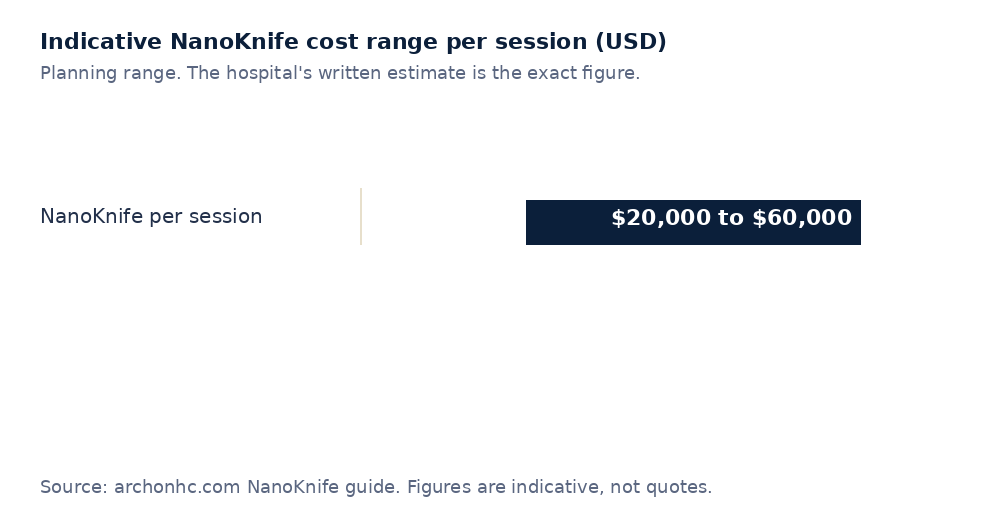
A single NanoKnife session for liver cancer in China typically costs from about $20,000, and can reach $60,000 in complex cases, based on our published NanoKnife guide from October 2026. That range covers the procedure itself, not flights, your stay, or an attendant's costs. Combining NanoKnife with another treatment in the same admission raises the total, and the written estimate shows each item separately.
In practice, the price moves with tumor complexity, the number of lesions, and whether other treatments are combined in the same admission. A small single tumor sits near the low end. Several lesions or a difficult location push it higher. Your case lands somewhere in between, and nobody can place it without your scans. That is why we ask for DICOM imaging and reports first. The hospital reviews the file and then issues a written, itemized estimate.
What makes the price go up or down?
- Tumor size and the number of lesions. A larger tumor or several lesions need more electrodes and more time.
- Location. A tumor tucked against a major vessel or bile duct needs more planning and imaging.
- Combined treatment. NanoKnife is often one part of a staged plan with targeted drugs or immunotherapy, and each part is priced separately.
- The hospital. Prices differ between centers, so compare written estimates with the same scope.
Sessions matter too. One well-placed session treats the targeted lesions in most cases, and your preliminary plan states how many the team expects.
What does the whole trip cost, beyond the procedure?
The procedure price is only part of the budget. Plan on 2 to 4 weeks in China for workup, the procedure, and observation. Add an attendant's travel and stay, follow-up imaging, and a contingency of 15 to 20 percent on top of the medical estimate. Visa fees at the Dhaka mission run roughly BDT 12,000 to 30,000. Our guide to cancer treatment costs in China walks through the same budgeting logic. Keep treatment and travel as two separate budgets.
Is NanoKnife better than surgery or heat ablation for liver cancer?
It depends on where the tumor sits. Surgery is often the first option when the tumor can be removed cleanly with enough healthy liver left behind. Heat ablation works well for small tumors away from large vessels. NanoKnife earns its place when the tumor hugs a vessel or bile duct, because heat loses reliability there and surgery carries more risk. The oncology team decides after studying your scans. Our guide to cryosurgery for cancer in China explains another minimally invasive approach used in the same hospitals.
No responsible doctor presents any single technique as a guaranteed cure. NanoKnife destroys the targeted tumor. Long-term outcome depends on tumor biology, liver function, and whether disease exists elsewhere, so it usually sits inside a combined plan with systemic therapy and surveillance. The World Health Organization's cancer fact sheet puts the scale in context: liver cancer caused about 732,000 deaths worldwide in 2024.
How long do you stay in China for NanoKnife treatment?
Most patients leave hospital within 1 to 3 days and resume light activity within a week. Follow-up imaging, usually a contrast CT or MRI, happens within days to confirm the ablation zone, then again at 1 to 3 months. The full trip, including workup before the procedure and observation after it, runs 2 to 4 weeks for most families. The hospital schedules follow-up imaging before you fly home, and surveillance continues after you return.
Which hospitals in China offer NanoKnife for liver cancer?
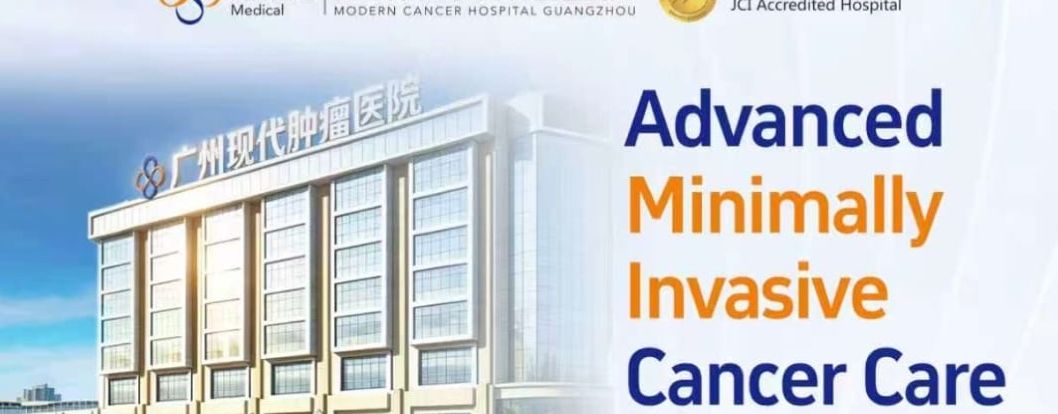
Guangzhou oncology centers have deep experience with interventional treatments, and NanoKnife is offered there. Modern Cancer Hospital Guangzhou is one of the centers Bangladeshi patients ask about most, and its profile explains the hospital's interventional oncology setup. The machine matters less than the team. What counts is which team accepts your case after reviewing your scans. Treat a center that accepts everyone with suspicion.
Before any hospital is chosen, the Chinese team studies your scans in a remote review. That review decides candidacy, sessions, and the written estimate. Do not plan around any price quoted before it.
How does the process work from Bangladesh?
It runs in a fixed order. You send your reports and DICOM imaging. The hospital team reviews the file and accepts or declines the case. If accepted, you receive a written plan with an itemized cost estimate. The hospital then issues an invitation letter, which supports your medical visa application in Dhaka. Visa processing typically takes 1 to 3 weeks, so start early. You travel, complete the workup and procedure, and finish follow-up imaging before flying home. After you return, surveillance continues. Our medical visa guide and our cancer treatment costs in China page cover the full sequence.
Frequently asked questions
How much does NanoKnife cost for liver cancer in China? A single session typically costs from about $20,000, and can reach $60,000 in complex cases. The exact figure comes only from the hospital's written estimate.
How many NanoKnife sessions are needed? One well-placed session treats the targeted lesions in most cases. More may be planned for several lesions or residual disease.
Is NanoKnife painful, and what is recovery like? The procedure runs under general anesthesia. Most patients describe soreness at the needle sites rather than deep pain. Hospital stay is usually 1 to 3 days, and light activity resumes within a week.
Can NanoKnife cure liver cancer? No responsible doctor presents any single technique as a guaranteed cure. NanoKnife destroys the targeted tumor, and long-term outcome depends on tumor biology, liver function, and disease elsewhere.
Do I need a medical visa for NanoKnife treatment in China? Yes. The hospital's invitation letter supports your visa application in Dhaka, and the application starts only after the hospital accepts your case.
Key takeaways
- NanoKnife for liver cancer in China costs from about $20,000 per session, up to $60,000 in complex cases. The written hospital estimate is the only exact figure.
- The price moves with tumor size, lesion count, location, and whether other treatments are combined.
- Budget beyond the procedure: 2 to 4 weeks in China, an attendant, follow-up imaging, and a 15 to 20 percent contingency.
- Remote scan review comes before any real price, invitation letter, or visa application.
- Talk with your oncologist before deciding. This article is general information, not medical advice.
Discuss your case with us — free
Share your reports and get an honest opinion: the right hospital, the written estimate, and whether you should travel at all.
Chat on WhatsAppEmail Us