Guides · Kidney Transplant
Kidney failure treatment options abroad dialysis vs transplant
When kidneys fail, two treatments keep a person alive: dialysis or a kidney transplant. This guide compares kidney failure treatment options abroad dialysis vs transplant. Dialysis cleans the blood with a machine, several times a week, for life. A transplant puts a kidney from a living family donor into the patient. For people fit for surgery with a donor, transplant gives a freer life, and after five years it costs less.
What happens when kidneys fail?
Kidneys filter waste and extra fluid from the blood. When they fail, waste builds up, fluid collects, and blood pressure rises. Without treatment, kidney failure is fatal. The two treatments that replace kidney function are dialysis and transplant. Both replace the filtering work of the kidneys. Neither cures the disease that damaged them.
In Bangladesh, most people with kidney failure start on dialysis because it is available in Dhaka and other cities. Transplant means travel, surgery, and a donor. That is why families compare the two so carefully before they decide.
What is dialysis and how does it work?
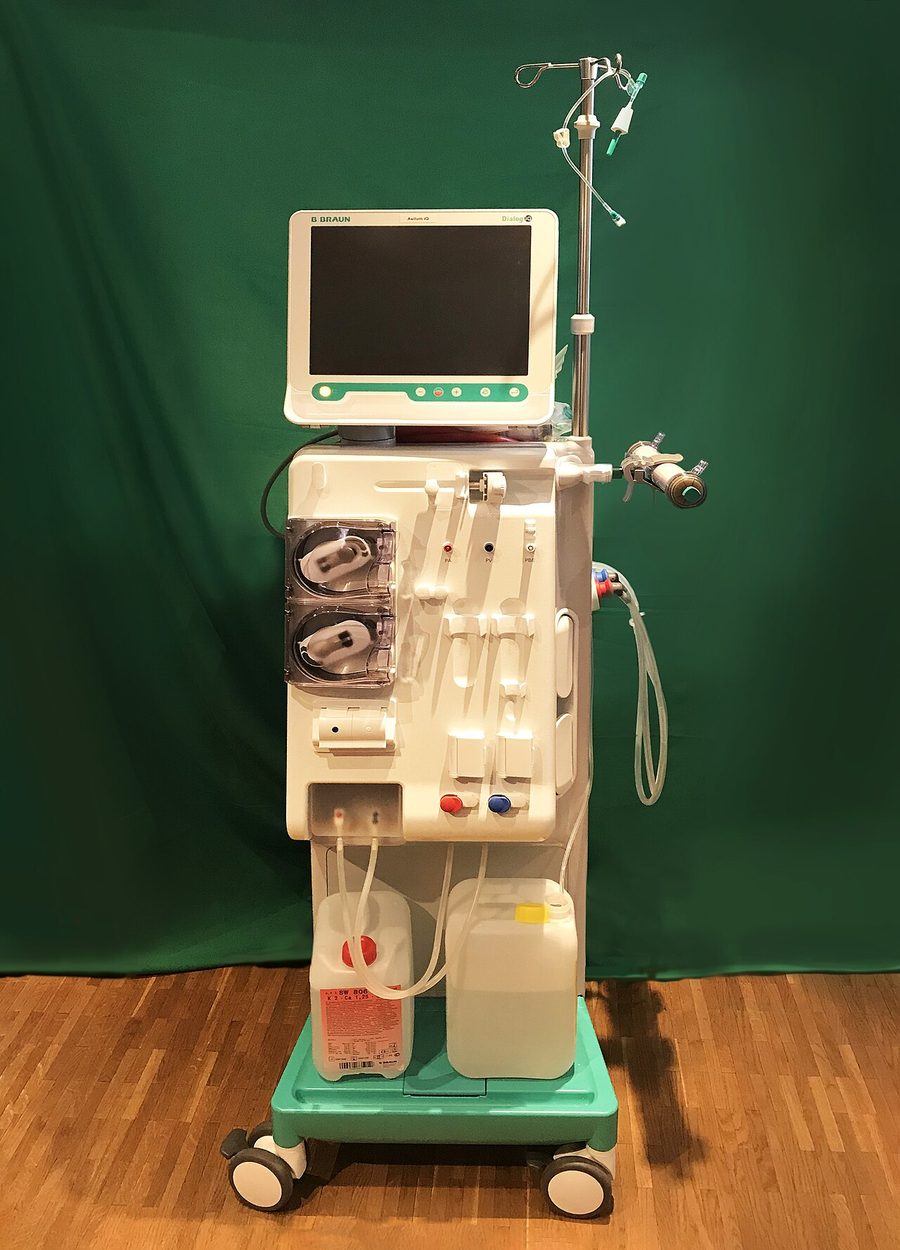
Hemodialysis is the common form. Blood leaves the body through a tube, passes through a filter in a machine, and returns clean. A session lasts about four hours. Most patients need two to three sessions every week, for the rest of their life unless they get a transplant. Between sessions, fluid and waste build up again, so diet and fluid limits matter. Many patients feel tired after a session and plan their week around it.
In Bangladesh, a session costs about BDT 3,000 to 5,000. At three sessions a week, that is roughly BDT 48,000 a month and BDT 576,000 a year. Medicines, blood tests, and travel to the dialysis centre add more. The National Kidney Foundation explains how dialysis works and what a session involves.
What is a kidney transplant?
A transplant is surgery that places a healthy kidney from a donor into the patient's body. The new kidney takes over filtering the blood. After recovery, most recipients stop dialysis entirely. They take medicines every day for life to stop the body rejecting the new kidney. Those medicines cost about BDT 15,000 to 25,000 a month.
For international patients in Pakistan, the donor must be a living family member. That rule is law, and it applies to every foreign patient. The donor goes through medical tests and a legal approval process before surgery. Our guide to kidney donor requirements in Pakistan explains the tests and the paperwork.
Transplant is major surgery. The patient needs to be fit enough for it, and the donor needs to be healthy enough to give a kidney safely. A nephrologist decides whether transplant is an option for a particular patient.
Kidney failure treatment options abroad dialysis vs transplant costs
Cost is where the two paths look most different. Dialysis is cheap to start and expensive to continue. Transplant is expensive to start and cheaper to live with. The numbers below come from Archon Healthcare's kidney transplant vs dialysis cost comparison, which lists the same figures.
Dialysis in Bangladesh runs about BDT 3,000 to 5,000 a session. Three sessions a week means about BDT 576,000 a year, or BDT 2,880,000 over five years. That excludes medicines, tests, and travel.
A transplant in Pakistan costs about $15,000 to $16,000 for the surgical package, plus $2,000 to $3,000 for pre-workup and early post-transplant care, roughly $18,000 in total. Add five years of anti-rejection medicine at BDT 15,000 to 25,000 a month, and the five-year total is about BDT 3,200,000. At five years the two totals are close. After that, transplant pulls ahead, because dialysis keeps charging every week while the transplant cost is mostly behind the patient.
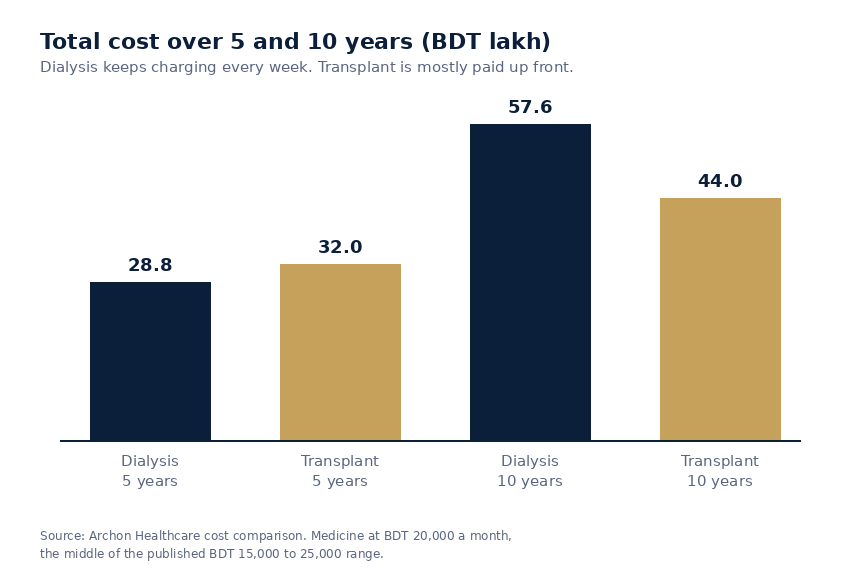
These are estimates, not a quote. The hospital gives a written estimate for each patient after reviewing the reports. Ask for it in writing before you travel. Our kidney transplant cost page lists the current figures.
Which option gives a better daily life?
Dialysis takes 12 or more hours a week attached to a machine, plus travel and recovery time after each session. Food and fluid limits apply every day. Travel is possible but needs a dialysis centre at the destination. Work is harder to hold down.
After a transplant and recovery, most recipients live without a dialysis schedule. Food limits ease. Travel gets simpler. Many return to work. The trade is daily medicine for life, regular blood tests, and a higher infection risk in the first months. The National Kidney Foundation describes life after a kidney transplant in plain terms.
Most nephrologists say transplant gives a better quality of life for patients who are fit for surgery and have a donor. Dialysis remains the right answer for people who cannot have surgery, or while they wait.
Can a Bangladeshi patient get a kidney transplant abroad?
Yes, with a family donor. The usual route is Pakistan, where transplant centres treat Bangladeshi patients with living family donors. The steps are reports review, donor tests, legal approval, medical visa on a hospital invitation letter, surgery, and a stay abroad for early recovery. Our medical visa guide explains the invitation letter and the documents. The waiting time depends on how fast the tests and the legal approval move. Our page on kidney transplant waiting time has the details.
Some families ask about dialysis abroad instead. Dialysis in Pakistan for Bangladeshi patients is possible for a short stay, but it is not a long-term plan for most families. The cost and the travel add up fast.
What if there is no family donor?
Deceased donor programs exist, but the waiting lists are long. In Pakistan, only living family donors are accepted for international patients. No hospital there will arrange a donor, and no facilitator should promise one. If no family member can donate, dialysis is the treatment that keeps the patient alive, and the family should talk to their nephrologist about all options. The family donor rules page explains who counts as a family donor under the law.
Frequently asked questions
Is dialysis or transplant better for kidney failure?
For most patients who are fit for surgery and have a family donor, transplant is better: a freer daily life and lower cost after about five years. Dialysis is better for patients who cannot have surgery. The decision belongs to the patient and their nephrologist.
How much does dialysis cost each month in Bangladesh?
About BDT 48,000 a month at three sessions a week, at BDT 3,000 to 5,000 a session. Medicines, tests, and travel cost extra.
How much does a kidney transplant cost in Pakistan?
About $15,000 to $16,000 for the surgical package, plus $2,000 to $3,000 for pre-workup and early post-transplant care, roughly $18,000 in total. Anti-rejection medicine then costs about BDT 15,000 to 25,000 a month for life.
Can I get a kidney transplant without a family donor?
In Pakistan, no. Only living family donors are accepted for international patients. Deceased donor programs exist elsewhere but the waiting lists are long.
How long do you stay abroad after a transplant?
Several weeks, for recovery and early follow-up. The hospital sets the exact stay in the treatment plan. Our post-transplant care guide covers the recovery period.
How we help
We help families compare the two options with real numbers, not promises. We get the hospital's written estimate, arrange the donor tests and the legal approval steps, sort the medical visa and the travel, and stay in touch after the patient returns home. If transplant is not the right choice for a patient, we say so. The first step is sending the reports for review. Our kidney transplant cost page lists the current figures, and the patient journey page shows the six steps from first message to follow-up.
This article is general information only. It is not medical advice. Kidney failure treatment decisions belong to the patient and their nephrologist.
Discuss your case with us — free
Share your reports and get an honest opinion: the right hospital, the written estimate, and whether you should travel at all.
Chat on WhatsAppEmail Us