Guides · Comparison
Cancer Treatment in China vs India for Bangladeshi Patients
When families compare cancer treatment in China vs India for Bangladeshi patients, the 2026 answer is China. Guangzhou hospitals offer cryoablation and NanoKnife at indicative prices, NanoKnife from about $20,000 per session and up to $60,000 in complex cases, and the medical visa route works. India has strong hospitals, but no verified cost band is published here, and its visa route only reopened in late June 2026 with limited slots.
China vs India at a glance
China is the first country Archon looks at when open surgery is not the answer. India is often the first country families ask about. The table compares what is actually known.
| China, the Archon lane | India, general information only | |
|---|---|---|
| Indicative cost band | $5,000 to $25,000 for one minimally invasive option (October 2026). A multi-modality plan can run higher. | No verified band published on this site. Ask the hospital for a written itemised quote. |
| Best for | Liver, lung and pancreatic cancers; cases where open surgery is high risk. | Large multi-speciality programs. |
| Key technologies | Cryoablation, NanoKnife (IRE), brachytherapy (seed implantation), microwave ablation, microvascular intervention. | Surgery, radiotherapy, chemotherapy, immunotherapy and targeted therapy. |
| Hospitals named | Modern Cancer Hospital Guangzhou; Zhujiang Hospital (Guangzhou). | None named. Archon does no outreach in India. |
| Medical visa | Hospital invitation letter, issued once your case is accepted. A few days to two weeks. | Resumed late June 2026 after nearly two years of restriction. IVAC in person, limited slots. No e-Medical visa for Bangladeshis. |
| Language and food | International patient departments with English support. Halal meals at Modern Cancer Hospital Guangzhou. | English is widely spoken in hospitals. Halal food is easy to find. |
| Archon coordination | Yes. Case review, hospital matching, documentation, medical visa support and travel planning. | No. General information only. |
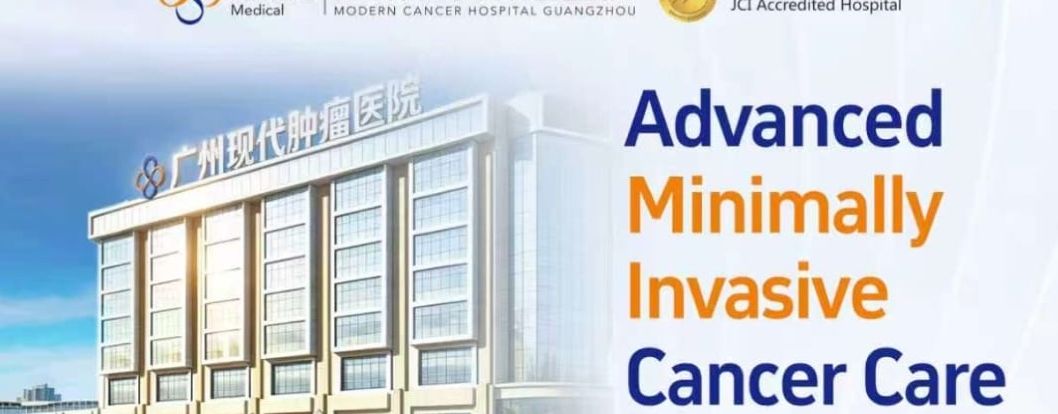
Modern Cancer Hospital Guangzhou, Guangzhou, China. Photo: Archon Healthcare.
Which country is better for cancer treatment, China or India?
It depends on the cancer and the treatment your oncologist recommends. China fits when the tumour cannot be removed by open surgery, or when surgery carries high risk. India fits when the plan is standard surgery, radiotherapy or chemotherapy at a large centre.
China built its name in minimally invasive oncology. Guangzhou centres treat large numbers of liver, lung and pancreatic cases with techniques that work through a needle or a small probe instead of a long incision. Recovery is usually faster, and tumours close to vital organs can sometimes be treated when surgery cannot reach them.
Before choosing either country, get a written second opinion from Chinese hospitals on your existing scans, or the equivalent from an Indian centre. It takes days and often changes the plan. Sometimes the answer is that treatment in Dhaka is enough, and no travel is needed.
Is cancer treatment cheaper in China or India?
No honest price comparison is possible from the figures published on this site. China has a verified indicative band of $5,000 to $25,000 for a single minimally invasive option. No India cancer cost band is published here at all. A price without a named hospital, a written plan and an itemised estimate is a sales figure, not a comparison.
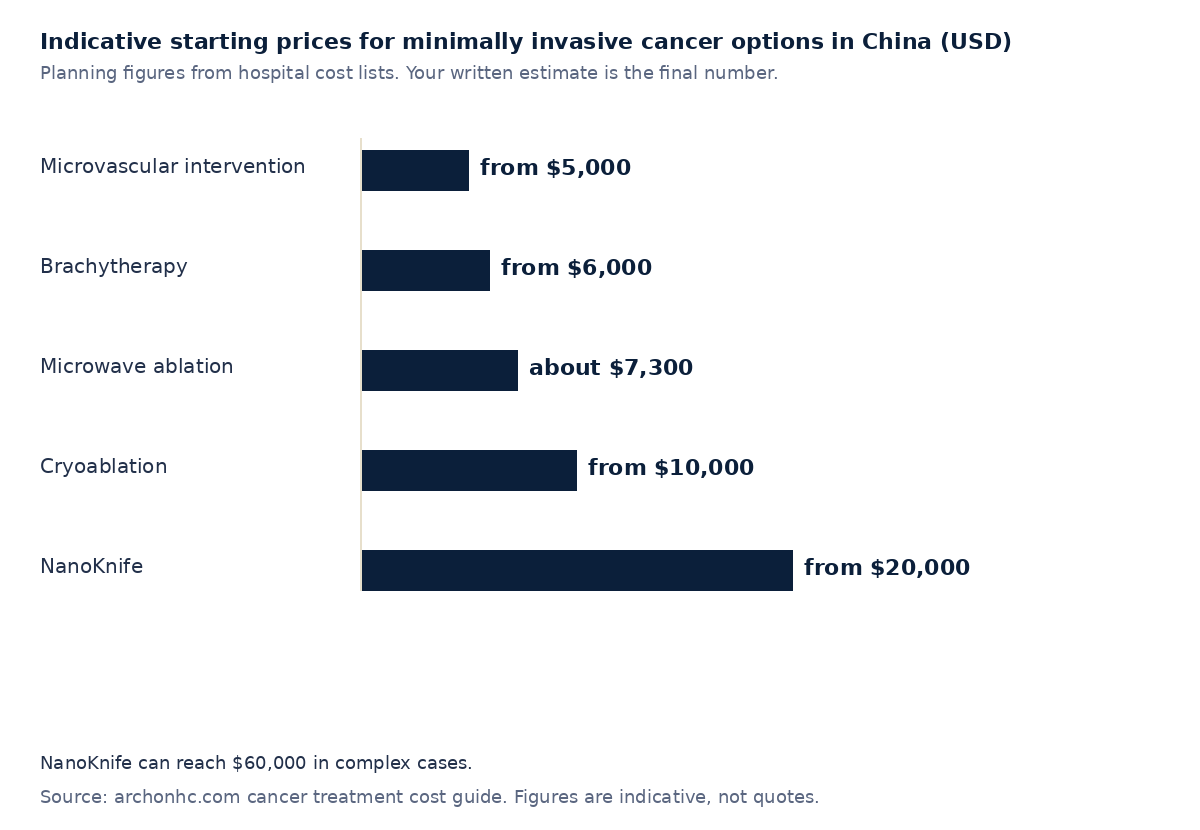
Indicative starting prices in China, per session or procedure. Source: Archon Healthcare cost guide, October 2026.
The chart shows starting prices for single options; most patients need more than one, and a multi-modality plan can run higher. The total bill also includes the hospital stay, flights, an attendant, and follow-up back home. The only number that matters is the written estimate the hospital gives after reviewing your scans. Get that estimate from both countries for the same treatment plan, and compare those two documents.
What cancer treatments does China offer that India does not?
China's Guangzhou centres built their reputation on minimally invasive options that treat the tumour without open surgery. Cryoablation freezes the tumour through a thin probe. NanoKnife uses short electrical pulses to destroy cancer cells near blood vessels and organs where a scalpel cannot go safely. Seed implantation places tiny radioactive seeds inside the tumour so radiation works from within. Learn how cryosurgery for cancer in China works, and read the NanoKnife treatment for liver cancer in China guide for the liver cases it suits best.
These techniques exist in a few Indian centres as well. The difference is emphasis. In Guangzhou they are the main approach, used every day at high volume. In India they sit inside larger departments where surgery and radiotherapy do most of the work. If your oncologist has said surgery is risky, that emphasis is what makes China worth a serious look.
Can Bangladeshi patients still get a medical visa for India?
Yes, but plan around it. Indian visa services for Bangladeshis resumed in late June 2026 after nearly two years of severe restriction. Medical visas go through the Indian Visa Application Centres on a priority basis, but slots remain limited. Bangladeshis cannot use the e-Medical visa route. The application goes in person through IVAC, and the fee is BDT 1,500. Apply as soon as the hospital invitation letter is ready. Our medical visa guide covers the documents every country asks for.
For China the route is simpler. The hospital issues the invitation letter once your case is accepted, and Archon guides the paperwork. Timelines run from a few days to two weeks. That difference matters when a diagnosis is recent and the family wants to move fast. Read the medical visa for cancer treatment in China guide for the China documents in detail.
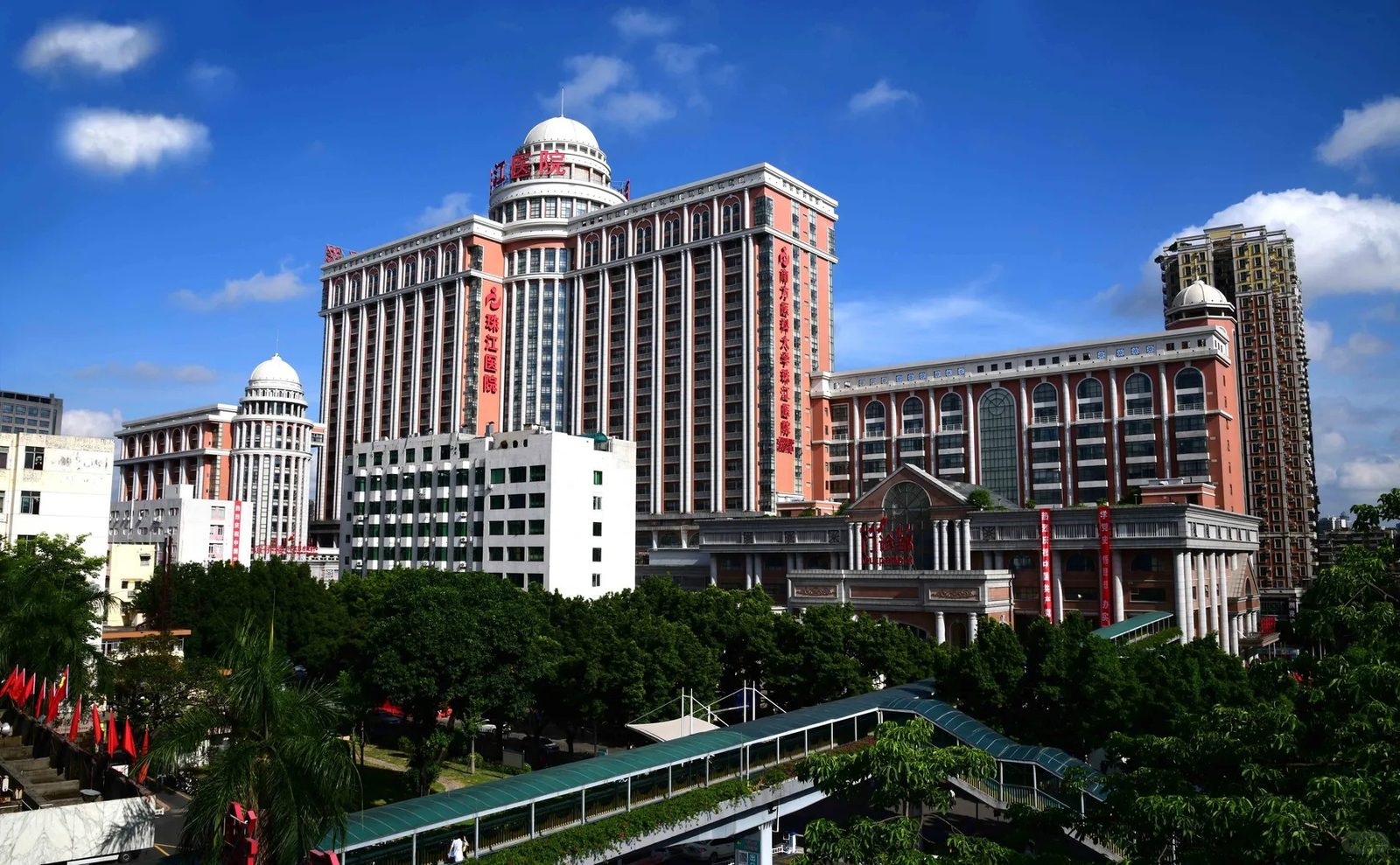
Zhujiang Hospital, Guangzhou. Photo: Archon Healthcare.
How long does cancer treatment in China take?
From first contact to travel is usually two to four weeks. Case review takes a few days, then the hospital's written estimate follows. Visa processing runs from a few days to two weeks. A single cryoablation or NanoKnife session needs days; a multi-modality plan can need several weeks. The cancer treatment timeline in China guide walks through the same journey step by step.
Do hospitals in China provide halal food and interpreters?
Yes. Modern Cancer Hospital Guangzhou provides halal meals, and its international patient department works in English. Zhujiang Hospital runs an international medical centre for foreign patients. Archon coordinates in Bengali, so the family talks through treatment and paperwork in its own language.
Cancer treatment in China vs India: how to decide
Work through the decision in order.
- Get a written second opinion on your existing scans from at least one centre.
- Ask both hospitals for a written, itemised estimate for the same treatment plan.
- Check the visa route before you commit to a date.
- Add up the full cost: treatment, stay, flights, attendant and follow-up.
- Choose the plan, then the country.
A price without a written plan is not a comparison. A hospital you cannot reach in time is not a real option. The right choice is the one where the treatment fits the cancer, the visa arrives before the surgery date, and the full cost is written down before anyone boards a plane. For help, read how to choose between cancer hospitals in China, or send your reports to Archon for a case review.
Frequently asked questions
Which country is best for liver cancer treatment? China. NanoKnife and cryoablation suit liver tumours that surgery cannot remove safely. The hospital decides after reviewing your scans.
How much does NanoKnife cost in China? From about $20,000 per session, up to $60,000 in complex cases (indicative, October 2026). Your exact figure comes from the hospital's written estimate.
Is a medical visa needed for cancer treatment in China? Yes. The hospital issues the invitation letter once your case is accepted, and Archon guides the paperwork end to end.
Can I get cancer treatment in India as a Bangladeshi patient? Yes. Visa services resumed in late June 2026. Medical visas go through IVAC in person with limited slots, and the e-Medical visa route is closed to Bangladeshi nationals.
Should I get a second opinion before choosing a country? Yes. It takes days, costs little relative to treatment, and often changes the plan.
Key takeaways
- China fits when open surgery is not the answer; its band is $5,000 to $25,000 for one minimally invasive option.
- No verified India cost band is published here, so compare written estimates, not headlines.
- India visas resumed in late June 2026 with limited slots. Apply early and in person through IVAC.
- Get a written second opinion before choosing a country.
- The hospital's written estimate is the final figure in both countries.
This guide is general information, not medical advice. Your oncologist decides your treatment.
Discuss your case with us — free
Share your reports and get an honest opinion: the right hospital, the written estimate, and whether you should travel at all.
Chat on WhatsAppEmail Us